
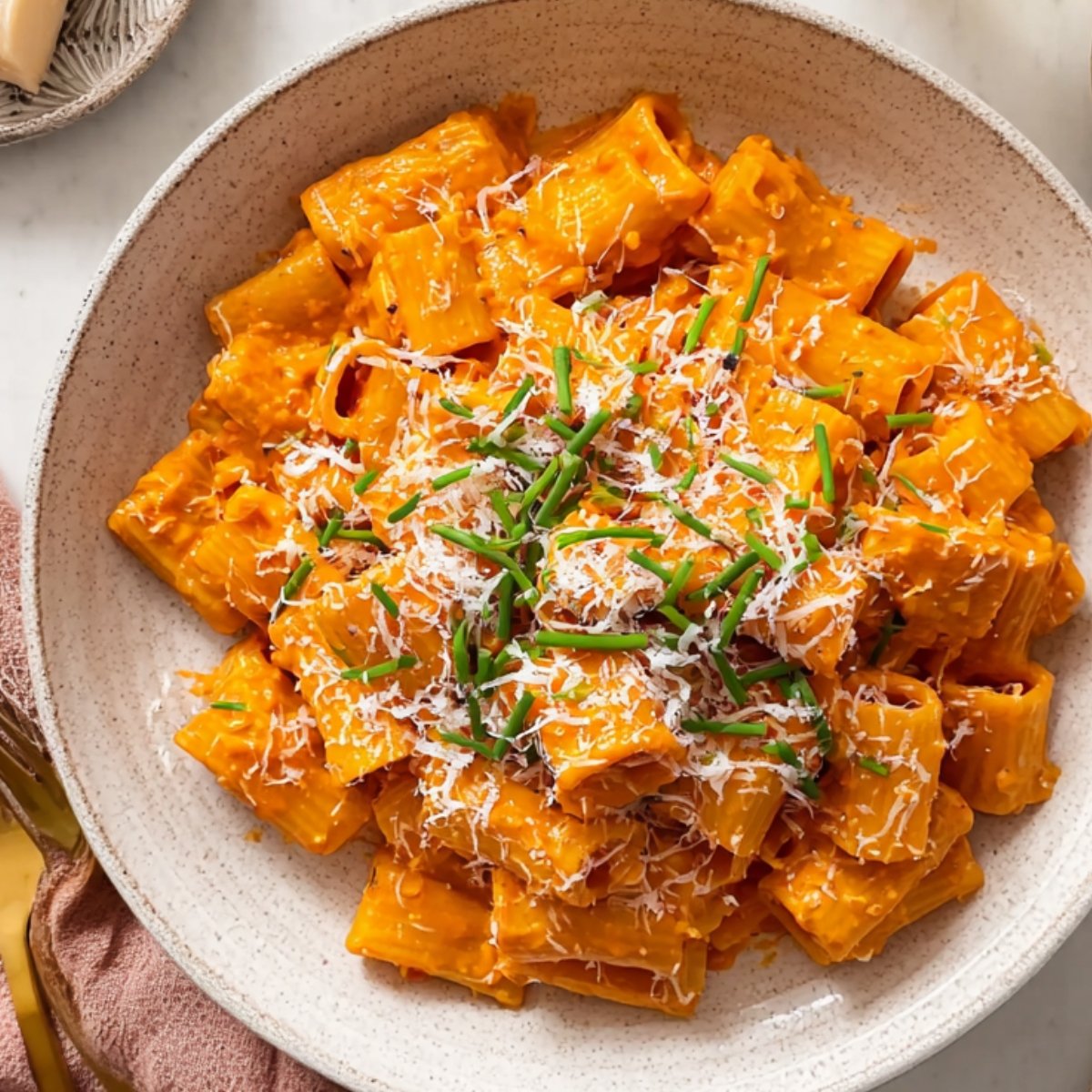
This creamy, spicy gochujang pasta brings together the bold heat of Korean chili paste with rich Italian comfort in one bowl. The sauce clings to every ridged piece of rigatoni, creating this gorgeous coral color that makes you want to dive in immediately. I first tried something similar at a small fusion restaurant downtown, and the combination of spicy, creamy, and umami flavors stuck with me for weeks. Now I make it at home whenever I'm craving something exciting but don't want to spend an hour in the kitchen-it's faster than takeout and tastes restaurant-quality.
If you're looking for more quick, flavor-packed dinners like this, you might also love my Creamy Pesto Chicken Recipe or this Easy Bang Bang Chicken Fried Rice that's always a hit with my family.
Why You'll Love This Gochujang Pasta
You'll have dinner on the table in 20 minutes, and it tastes like you spent way longer on it. The gochujang adds this incredible depth-it's spicy but not overwhelming, with a subtle sweetness that makes the sauce really complex. The heavy cream balances everything out, and the parmesan brings that salty, nutty finish. It's perfect for busy weeknights when you want something more interesting than plain marinara but don't want to dirty a million pots. The leftovers are amazing too, if you ever have any.
Jump to:
Gochujang Pasta Ingredients
Here's what you'll need to make this bold, creamy Gochujang Pasta.
See Recipe Card Below This Post For ingtedient Quantites
- Rigatoni pasta : The ridged tubes are perfect for catching all that creamy sauce, but fusilli or even spaghetti work great too.
- Garlic : Adds aromatic depth and pairs beautifully with the gochujang's heat.
- Shallot : Brings a subtle sweetness that balances the spice.
- Unsalted butter : Creates a rich base for sautéing and helps the gochujang bloom.
- Gochujang : This Korean chili paste is the star-spicy, slightly sweet, and deeply flavorful.
- Heavy cream : Makes the sauce luxuriously creamy and mellows the heat just enough.
- Oyster sauce : Adds umami depth that makes the whole dish taste richer.
- Parmesan cheese : The salty, nutty flavor ties everything together and helps thicken the sauce.
- Pasta water : The starchy water helps create a silky, glossy sauce that clings to the pasta.
- Parmesan cheese : Extra cheese on top never hurt anyone.
- Chives : Adds a fresh pop of color and a mild onion flavor.
How to Make Gochujang Pasta
This comes together quickly, so have everything ready before you start.
Cook the pasta: Bring a large pot of salted water to a boil over high heat. Add the rigatoni and cook according to the package directions until it's al dente, usually about 10 to 12 minutes. Before you drain it, scoop out at least half a cup of that starchy pasta water and set it aside-you'll need it later.
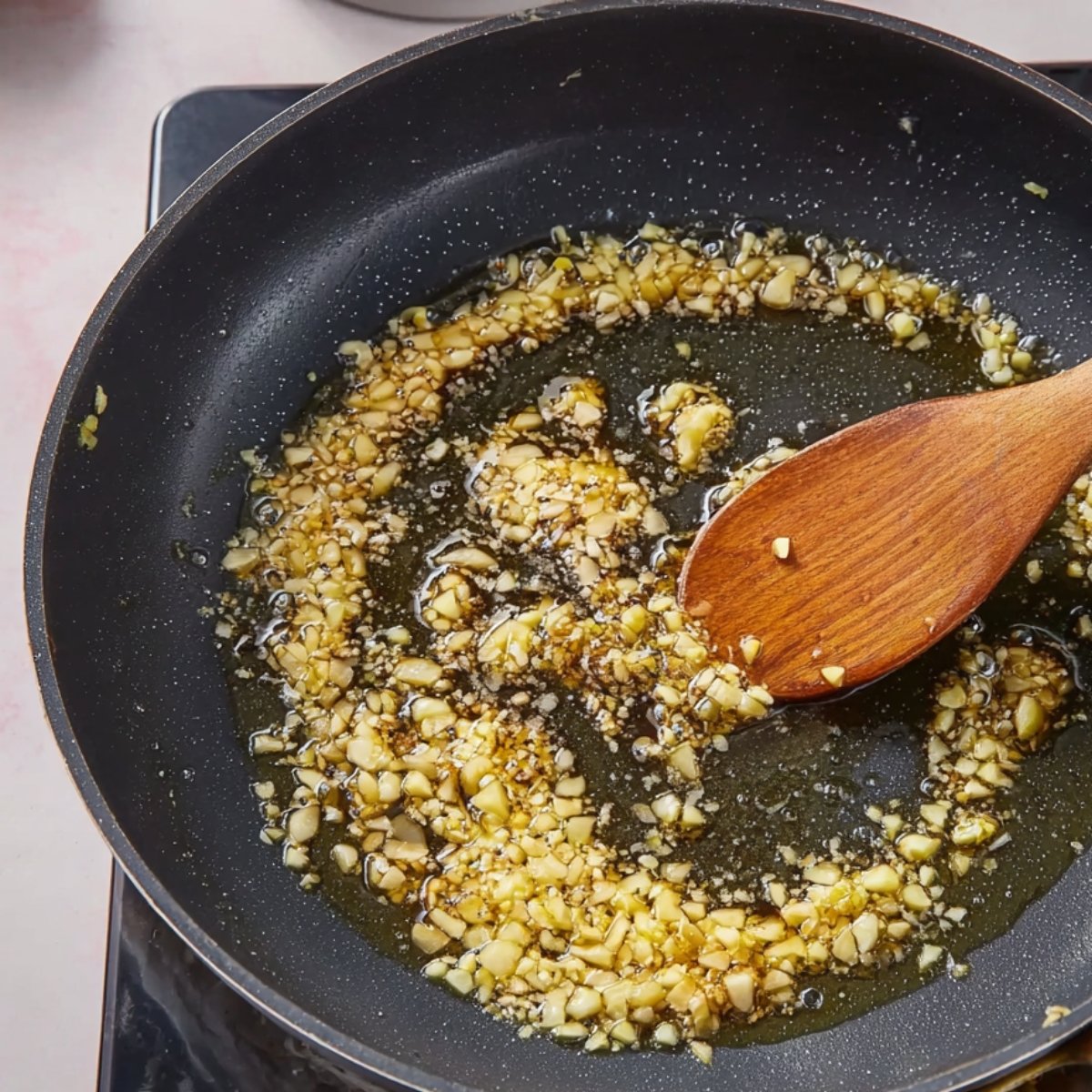
Sauté the aromatics: While the pasta cooks, melt the butter in a large skillet over medium-low heat. Toss in the minced garlic and diced shallot, and let them sizzle gently for about 2 minutes. You'll know they're ready when your kitchen smells amazing and they've turned lightly golden.
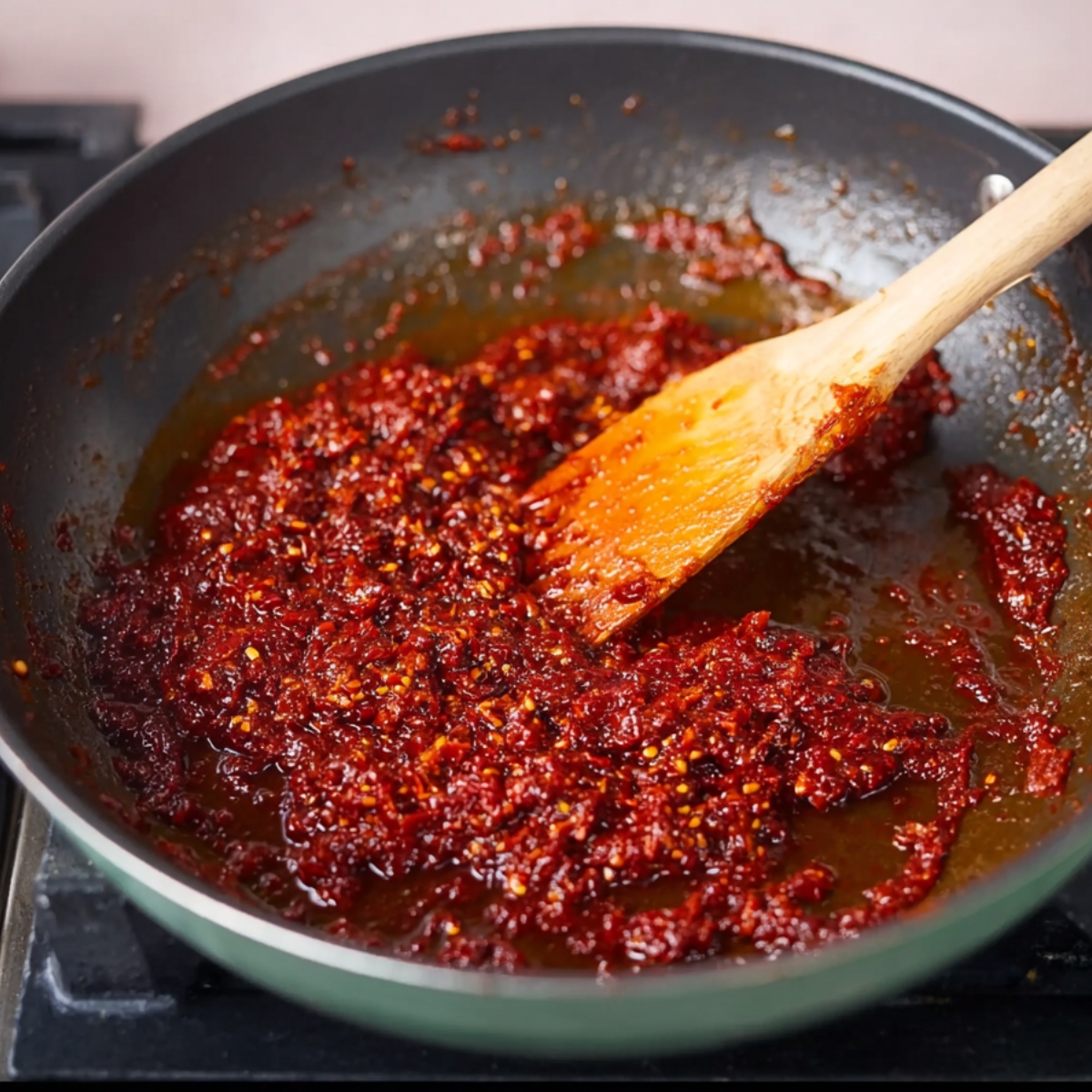
Bloom the gochujang: Stir in the gochujang and let it cook for another 2 minutes, stirring constantly. This step helps tone down the raw heat and brings out all those sweet, savory flavors.
Build the sauce: Pour in the heavy cream and oyster sauce, stirring everything together until it's smooth. Let it bubble gently for 4 to 5 minutes until it thickens slightly and turns this gorgeous peachy-coral color.
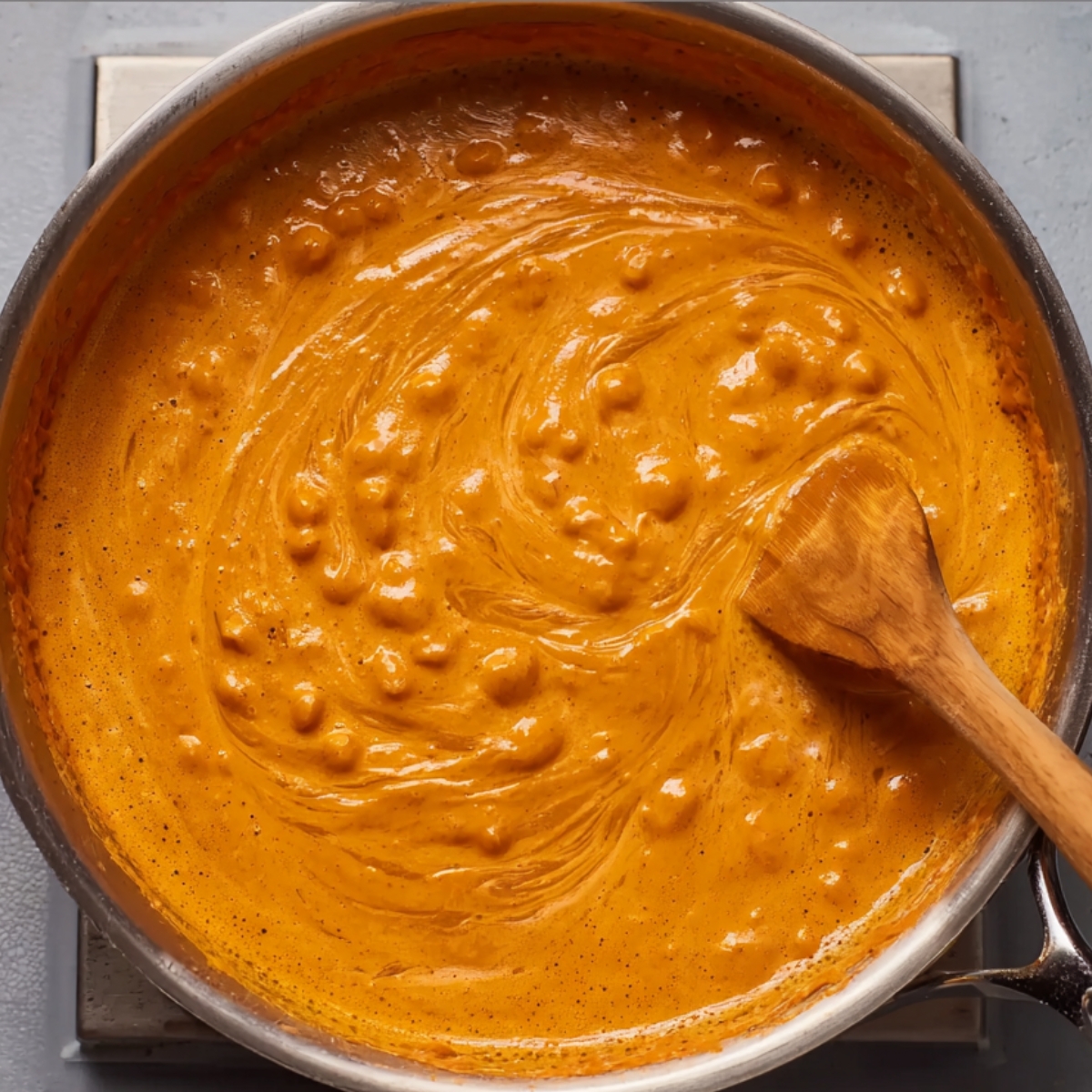
Combine everything: Add your drained pasta to the skillet and toss it around to coat every piece. Sprinkle in the parmesan and start adding the reserved pasta water a little at a time, stirring until the sauce becomes silky and glossy. Let it cook for another minute or two so the flavors can meld together.
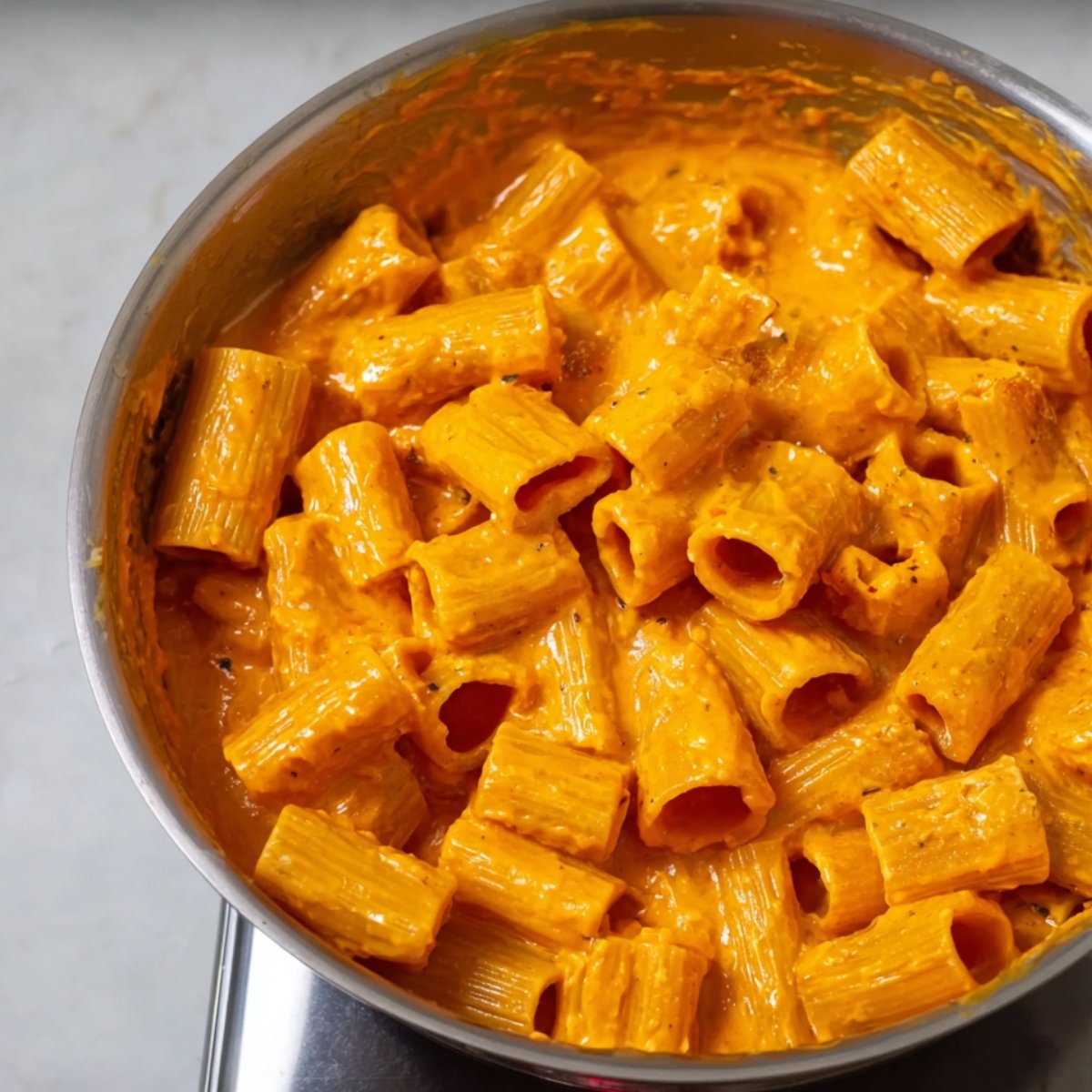
Serve it up: Divide the pasta among bowls and top each one with a generous sprinkle of parmesan and some chopped chives. Serve it hot and watch it disappear.
Substitutions and Variations
Different pasta shapes: Any short pasta works beautifully here-penne, fusilli, or even shells. Long pasta like spaghetti or fettuccine is great too.
Make it lighter: Swap the heavy cream for half-and-half or even whole milk, though the sauce won't be quite as thick and rich.
Add protein: Toss in cooked chicken, shrimp, or crispy tofu for a more filling meal.
Vegetarian twist: Skip the oyster sauce and use soy sauce or tamari instead for a vegetarian version.
Extra veggies: Spinach, mushrooms, or bell peppers would all be delicious stirred in at the end.
Equipment For Gochujang Pasta
- Large pot: For boiling the pasta.
- Colander: To drain the pasta (but remember to save that pasta water first).
- Large skillet: Big enough to hold all the pasta and sauce together.
Storage and Reheating Tips
Store any leftovers in an airtight container in the fridge for up to 3 days. The sauce will thicken as it sits, which is totally normal. When you reheat it, add a splash of milk or cream and warm it gently on the stovetop over low heat, stirring frequently. You can also microwave it, but add a little liquid first and stir halfway through so it doesn't dry out.
Serving Suggestions
This Gochujang Pasta is rich and satisfying on its own, but here are some cozy ways to round out the meal:
- Serve it with a simple green salad dressed with lemon and olive oil to cut through the richness.
- Add some garlic bread or crusty sourdough for dipping into any extra sauce left in the bowl.
- Pair it with roasted vegetables like broccoli or Brussels sprouts for a complete dinner.
- A glass of chilled white wine or even a light beer complements the spicy, creamy flavors perfectly.
If you're in the mood for more comforting, creamy dinners, try my Creamy Chicken Stroganoff Recipe or the Peppercorn Sauce Recipe that's just as indulgent.
Expert Tips
Don't skip the pasta water. That starchy liquid is what makes the sauce glossy and helps it cling to the Gochujang Pasta instead of pooling at the bottom of the bowl.
Bloom the gochujang. Cooking it in the butter for a couple of minutes before adding the cream makes a huge difference in flavor-it becomes deeper and less harsh.
Use freshly grated parmesan. The pre-grated stuff doesn't melt as smoothly and can make your sauce grainy.
Adjust the heat to your taste. Gochujang can vary in spiciness depending on the brand, so taste as you go and add more or less to suit your preference.
Serve immediately. This Gochujang Pasta is best enjoyed right away while the sauce is still creamy and the pasta is hot.
What Makes This Gochujang Pasta So Good
The magic here is how the gochujang mellows when you cook it with butter, then transforms into this silky, slightly sweet, perfectly spicy sauce when the cream goes in. You get layers of flavor-garlic, umami from the oyster sauce, richness from parmesan-all balanced by that signature Korean heat. It's the kind of dish that feels fancy but comes together in one skillet with ingredients you probably already have. Plus, the Gochujang Pasta water helps everything emulsify into this glossy, crave-worthy sauce that coats every bite.
FAQ
Does gochujang go with pasta?
Absolutely. Gochujang adds this incredible spicy, slightly sweet, umami-rich flavor that pairs beautifully with creamy Gochujang Pasta sauces. It's become one of my favorite ways to add depth to simple weeknight dinners.
What pairs well with gochujang?
Gochujang loves butter, cream, garlic, soy sauce, and anything umami-rich like parmesan or mushrooms. It also works great with honey or maple syrup if you want to balance the heat with sweetness.
What can I make with gochujang sauce?
Besides pasta, you can use it as a marinade for chicken or pork, stir it into fried rice, mix it with mayo for a spicy spread, or toss it with roasted vegetables. It's incredibly versatile.
What cream to use for gochujang pasta?
Heavy cream works best because it creates that luxurious, thick sauce. If you want something lighter, half-and-half will work, though the sauce won't be quite as rich. Whole milk can work in a pinch, but you might need to add a bit more parmesan to help thicken it.
Related
Looking for other recipes like this? Try these:

Pairing
These are my favorite dishes to serve with Gochujang Pasta:



Gochujang Pasta
Equipment
- 1 Large pot For boiling the pasta
- 1 Colander To drain the pasta (but remember to save that pasta water first)
- 1 Large skillet Big enough to hold all the pasta and sauce together
Ingredients
- oz dried rigatoni pasta or fusilli, spaghetti etc. - any pasta of your choice
- 6 cloves garlic minced adds flavor and a mild heat
- 1 medium shallot diced for a sweet mild onion flavor
- 3.3 tablespoons unsalted butter for richness and smooth texture
- 2.75 tablespoons gochujang Korean chili paste adds spicy and slightly sweet flavor
- 1.4 cups heavy cream provides a creamy base for the sauce
- 1.1 tablespoons oyster sauce adds a savory depth to the dish
- ⅓ cup parmesan cheese freshly grated - around 27g adds umami and creaminess
- ½ cup pasta water more as needed to help sauce consistency
- Parmesan cheese freshly grated adds extra flavor and a nice finish
- Chives chopped for a fresh mild onion flavor to garnish
Instructions
- Boil the pasta in a large pot of salted water until al dente, following the package directions. Reserve ½ cup of pasta water.
- In a large skillet, melt butter over medium-low heat. Add minced garlic and diced shallot and sauté until softened and fragrant, around 2 minutes.
- Stir in gochujang and cook for about 2 minutes to mellow out the spice.
- Pour in heavy cream and oyster sauce, stirring until combined. Let the sauce thicken for 4-5 minutes.
- Add cooked pasta to the skillet. Stir in parmesan cheese and reserved pasta water, mixing until the sauce becomes creamy. Cook for 1-2 minutes more, ensuring everything is well combined.
- Garnish with chopped chives and extra parmesan cheese before serving.



Leave a Reply