
The smell hits you first. That deep, earthy sweetness of paprika meeting hot lard, onions going golden at the edges, the whole kitchen turning into something warm and a little bit magical. It's the kind of scent that makes you stop whatever you're doing and just breathe it in.
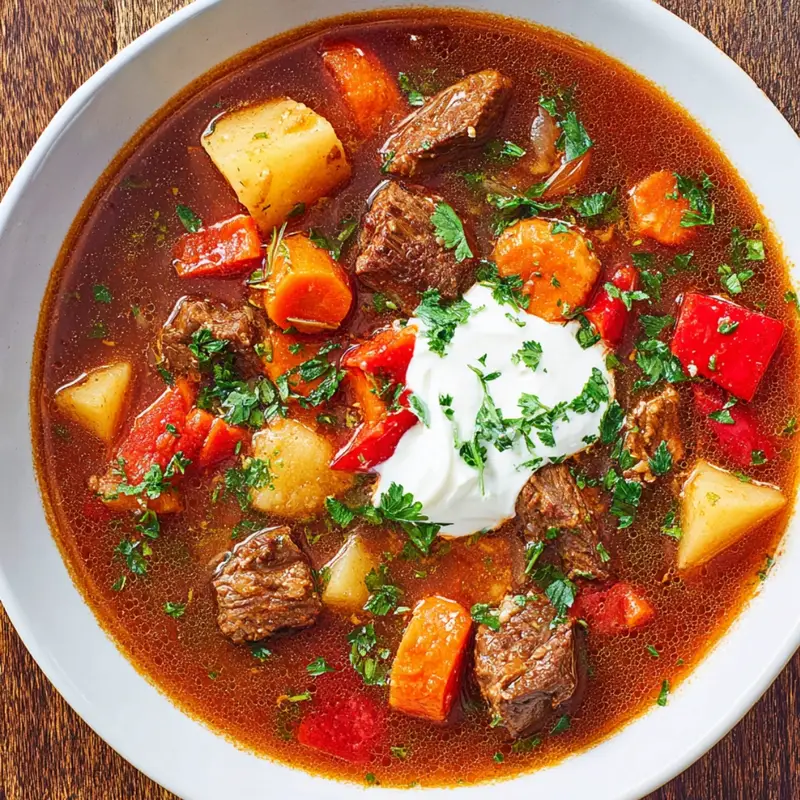
This Hungarian Goulash isn't the stuff you might remember from school cafeterias. This is the real thing, the kind Hungarian grandmothers have been stirring in heavy pots for generations. Tender beef, vibrant red bell peppers, a broth so rich it clings to your spoon. It's comfort in a bowl, and it tastes like someone's been cooking all day just for you.

What Makes This Hungarian Goulash Hungarian GoulashSo Special
Let me tell you about the first time Grandma made this for us. She'd just come back from a trip to Budapest, her suitcase practically bursting with tins of authentic Hungarian paprika. "The real stuff," she kept saying, holding up a bright red tin like it was treasure. She was right.
We gathered around her kitchen that Sunday afternoon, and she started with the lard. "No shortcuts," she said, dropping that glossy spoonful into her old Dutch oven. The onions went in next, and she let them cook way longer than I thought you were supposed to. "Patience," she reminded me when I kept peeking. "This is how you build flavor."
Then came the paprika, and the whole pot turned this gorgeous rust-red color. oliver, my nephew who was seven at the time, wrinkled his nose. "It smells weird, Grandma."
She laughed. "Weird good or weird bad?"
He thought about it. "Weird... hungry."
By the time that traditional Hungarian Goulash had been simmering for over an hour, filling the house with its paprika-spiced steam, Oliver was practically hanging over the pot. When Grandma finally ladled him a bowl, he took one bite, his eyes went wide, and he said, "This is the best soup I ever had." Then he asked if he could have it for his birthday dinner. He was serious.
Jump to:
- What Makes This Hungarian Goulash Hungarian GoulashSo Special
- Hungarian Goulash Ingredients
- How to Make Hungarian Goulash (Step by Step)
- Smart Swaps and Substitutions
- Making It Kid-Friendly
- Equipment For Hungarian Goulash
- Storing Your Hungarian Goulash
- Top Tip
- Why You'll Love This Authentic Hungarian Goulash Stew
- FAQ
- Make This Your New Cold-Weather Favorite
- Related
- Pairing
- Hungarian Goulash
Hungarian Goulash Ingredients
For the base:
- Pork lard
- Yellow onions, chopped
- Quality genuine imported Hungarian sweet paprika
For the stew:
- Stewing beef, cut into ½-inch pieces
- Cloves garlic, minced
- Red bell peppers, seeded/membranes removed, cut into ½-inch chunks
- Yellow bell pepper, seeded/membranes removed, cut into ½-inch chunks
- Tomatoes, diced
- Carrots, diced
- Potatoes, cut into ½-inch chunks
For seasoning:
- Beef broth
- Bay leaf
- Salt
- Freshly ground black pepper
- Crushed caraway seeds
SEE RECIPE CARD FOR QUANTITE
How to Make Hungarian Goulash (Step by Step)
This classic Hungarian Goulash takes a little time, but most of it is just letting the pot do its thing while you go about your day.
Start with the aromatics.
Melt your pork lard (or butter if that's what you've got) in a Dutch oven over medium-high heat. Add those chopped onions and let them cook until they're starting to brown, about 8 or 9 minutes. You want some color here. It adds sweetness.
Brown the beef.
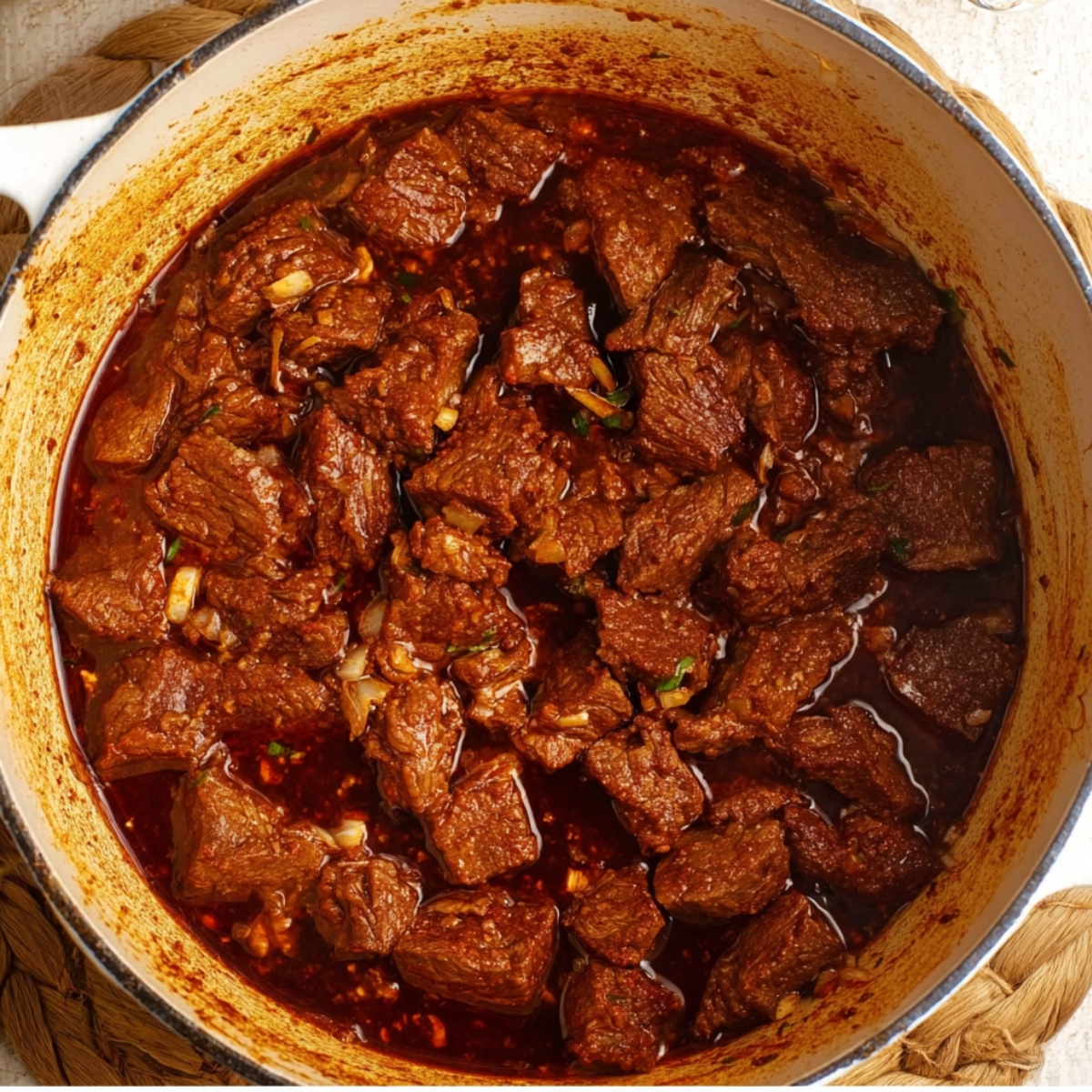
Toss in your stewing beef and let it cook until it's just beginning to get some color, another 8 to 10 minutes. You're not trying to sear it hard; you just want it to lose that raw look.
Add the vegetables.
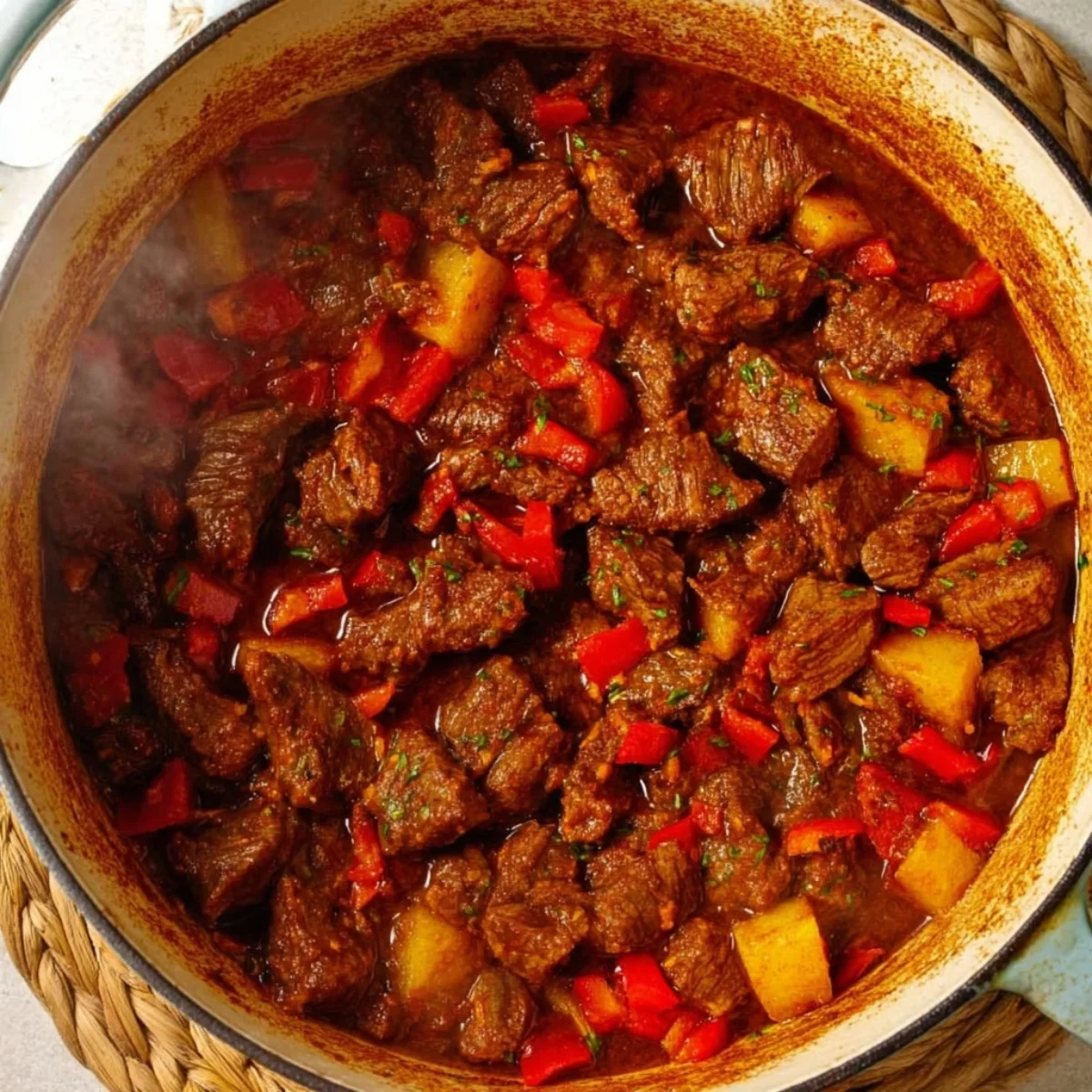
In go the bell peppers, tomatoes, and garlic. Cook everything together for about 7 minutes, stirring now and then. Your kitchen should smell absolutely incredible by now.
The paprika moment.
Here's the important part. Take the pot off the heat. Stir in that beautiful Hungarian paprika, along with the salt, pepper, and caraway seeds if you're using them. Taking it off the heat keeps the paprika from burning and turning bitter.
Build the broth.
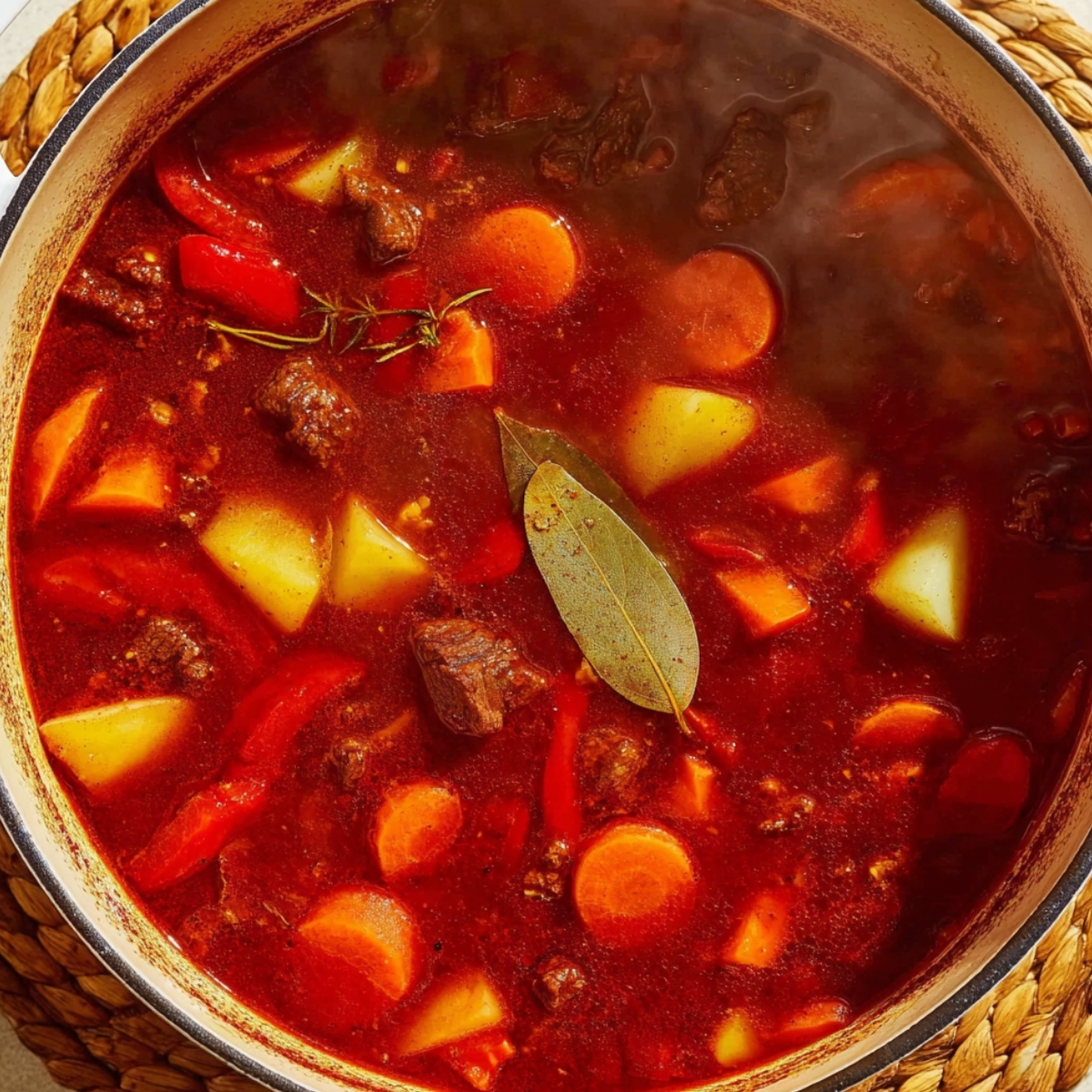
Pour in your beef broth and toss in the bay leaf. Put the pot back on the stove and bring everything to a boil. Once it's bubbling, turn the heat down to medium-low, cover it up, and let it simmer for about 40 minutes.
Finish with the root vegetables.
Add your carrots and potatoes, bring it back to a boil, then reduce to medium-low again. Cover and simmer for another 35 minutes or so, until the beef is so tender it practically falls apart when you look at it.
Final touches.
Taste and add more salt if you need it. Fish out that bay leaf. Let the goulash rest for a few minutes before serving. It just gets better.
If you love hearty, satisfying meals like this, you'll probably also enjoy our Easy Hot Italian Sub Sliders Recipe for a different kind of comfort food.
Smart Swaps and Substitutions
Can't find pork lard? Butter works beautifully, and so does bacon grease if you've got some saved. Each one brings its own character to the pot.
No Hungarian paprika? Spanish smoked paprika will give you a different flavor profile, but it can work in a pinch. Just know it won't taste quite the same. The Hungarian stuff is sweeter, less smoky.
If you're not a fan of caraway, leave it out. Grandma always said it was optional anyway, though she never skipped it herself.
For a thicker paprika beef stew, you can mash a few of the potato chunks against the side of the pot near the end of cooking. They'll dissolve into the broth and give you more body.
Want to use a slow cooker? Brown everything on the stove first, then transfer to your crockpot with the broth and seasonings. Cook on low for 6 to 7 hours, adding the carrots and potatoes in the last 90 minutes.
Making It Kid-Friendly
Oliver's seven-year-old palate approved this as-is, but if your kids are sensitive to new flavors, here's what you can adjust.
Cut back on the paprika to 2 or 3 tablespoons for a milder flavor. You'll lose some of that signature color, but the stew will still be delicious and a little less "weird" for cautious eaters.
Serve it over egg noodles or with a big piece of buttered bread for dipping. Kids love having something to soak up that rich broth.
Let them top their own bowls. A dollop of sour cream, a sprinkle of fresh parsley, maybe some shredded cheese. When they feel like they're in charge, they're more likely to try it.
And honestly? Most kids love this once they taste it. There's something about the sweet paprika and tender beef that just works.
Equipment For Hungarian Goulash
- Cast iron, enameled cast iron, or heavy stainless steel
- Must have a tight-fitting lid
- Heavy bottom prevents burning during long simmer
- Large enough to prep all vegetables comfortably
- Sharp 8-inch knife for chopping onions, peppers, and vegetables
- For stirring and scraping up browned bits from the bottom
- For serving the goulash into bowls
Storing Your Hungarian Goulash
Here's the good news: this Hungarian Goulash stew tastes even better the next day. Something about letting all those flavors marry overnight in the fridge.
In the refrigerator: Let it cool completely, then transfer to an airtight container. It'll keep for 3 to 4 days. Reheat gently on the stove, adding a splash of broth or water if it's thickened up too much.
In the freezer: This freezes beautifully for up to 3 months. Cool it completely, portion it into freezer-safe containers, and label with the date. Thaw overnight in the fridge before reheating.
When you reheat it, do it slowly over medium-low heat. Stir occasionally and give it time to come back to temperature. Rush it and you might end up with unevenly heated beef.
Grandma used to make a double batch every time, freezing half for what she called "emergency comfort food." She was onto something.
Top Tip
After that first time Grandma made us her old-world Hungarian Goulash, she pulled me aside while everyone else was going back for seconds.
"You know the real secret?" she whispered, even though there was no reason to whisper.
I leaned in.
"The paprika, yes. The time, yes. But really?" She tapped the side of the pot. "It's about not rushing. Let the onions get sweet. Let the meat take its time. Everything good in this pot happens because you let it happen."
She was right. This isn't a Tuesday night quick dinner. It's a Sunday afternoon, let-it-simmer, make-the-house-smell-amazing kind of meal. The kind where the cooking is part of the comfort, not just the eating.
Now every time I make this, I think about Grandma's kitchen, her bright red paprika tin, and Oliver's face when he tasted it for the first time. Some recipes are just like that. They become memories while you're still making them.
Why You'll Love This Authentic Hungarian Goulash Stew
This isn't just another beef stew. It's a Hungarian heritage dish that's been perfected over centuries, and every spoonful tells you why it's stood the test of time.
The paprika isn't just for color. It's the soul of the dish, giving you that signature sweetness and gentle warmth that makes authentic Hungarian goulash so different from anything else. You're not looking for heat here; you're looking for depth.
The beef gets meltingly tender after its long simmer. The vegetables soften into the broth but keep just enough texture to remind you they're there. And that broth? It's thick, rich, clinging to everything in the most wonderful way.
This is a one-pot meal that feels like a hug. It's the kind of thing you make on a cold Sunday when you want your house to smell amazing and your family to gather around the table without anyone needing to be asked twice.
Perfect for a cozy dinner, this rustic Hungarian meal pairs beautifully with crusty bread or even alongside something lighter like our Easy Brown Sugar Glazed Carrots.
FAQ
What is in traditional Hungarian goulash?
Authentic Hungarian gulyás is built on beef, onions, Hungarian sweet paprika, bell peppers, and potatoes in a rich broth. Unlike American Hungarian Goulash with elbow macaroni, the real thing is more of a hearty soup with tender stewed meat and vegetables. The paprika is what makes it Hungarian, giving it that distinctive sweet, earthy flavor and gorgeous color. Some versions include caraway seeds for extra depth. Grandma always said, "If it doesn't have good paprika, it's not really goulash."
What is traditionally eaten with Hungarian Goulash?
In Hungary, gulyásleves soup is often served with fresh bread for soaking up the broth, or with small pinched noodles called csipetke. A dollop of sour cream on top is traditional, and pickles on the side add a nice acidic contrast. Some families serve it with a simple cucumber salad. It's really a complete meal in a bowl, so you don't need much else. Just something to mop up every last bit of that incredible paprika-rich broth.
What is the difference between goulash and Hungarian goulash?
American goulash is usually a pasta dish with ground beef, tomato sauce, and elbow macaroni, sort of like a homestyle pasta bake. Traditional Hungarian Goulash from Hungary is a completely different animal: it's a soup or stew made with chunks of beef, lots of sweet paprika, onions, peppers, and potatoes in a flavorful broth. Think of it as the difference between spaghetti and beef goulash recipe from Budapest. Both are comforting, but Hungarian goulash has centuries of history and a flavor profile you won't find anywhere else.
What is the secret to a good Hungarian Goulash?
Three things make all the difference: quality Hungarian sweet paprika (the real imported stuff, not the generic grocery store kind), patience to let the onions caramelize and the meat get truly tender, and not skipping that step where you take the pot off the heat before adding the paprika. That last one keeps the paprika from burning and turning bitter. My grandma also swore by using lard instead of oil, saying it added a richness you couldn't get any other way. But honestly? The biggest secret is just giving it time. This slow-cooked Hungarian stew rewards patience more than anything else.
Make This Your New Cold-Weather Favorite
There's something deeply satisfying about making a pot of real Hungarian Goulash. The way the house smells, the way it brings people to the table, the way that first spoonful warms you from the inside out.
This isn't complicated cooking. It's honest, straightforward, and generous. The kind of food that reminds you why home cooking matters.
So grab some good paprika, a heavy pot, and an afternoon when you don't need to rush anywhere. Let the onions take their time. Let the beef get tender. Let the broth work its magic.
Your kitchen will smell like a Hungarian countryside cottage. Your family will gather around wondering what you're making. And when you finally ladle it into bowls, you'll understand why this simple stew has been loved for generations.
Make it this weekend. You won't regret it.
Related
Looking for other recipes like this? Try these:




Pairing
These are my favorite dishes to serve with Hungarian Goulash




Hungarian Goulash
Equipment
- 1 Dutch oven or heavy cast-iron pot tight-fitting lid and thick base to prevent scorching during slow cooking
- 1 Large enameled cast-iron or stainless steel pot spacious alternative for prepping and simmering all ingredients
- 1 8-inch chef's knife sharp blade ideal for chopping onions, peppers, tomatoes, and vegetables
- 1 Wooden spoon or silicone spatula helps stir and lift browned bits from the bottom of the pot
- 1 Ladle useful for serving the goulash neatly into bowls
Ingredients
- 4 tablespoons pork lard traditional fat for deep flavor
- 2 pounds yellow onions ,chopped aromatic base
- ⅓ cup Hungarian sweet paprika quality paprika for rich color
- 2 pounds stewing beef ,cut into ½-inch cubes tender cut preferred
- 6 cloves garlic, minced fresh for best aroma
- 3 red bell peppers, diced sweetness and body
- 1 yellow bell pepper, diced color and balance
- 3 tomatoes , diced adds acidity and depth
- 3 carrots diced natural sweetness
- 3 medium potatoes cubed hearty texture
- 6 cups beef broth flavorful simmering liquid
- 1 bay leaf earthy aroma
- 1 ¼ teaspoons salt season to taste
- ¾ teaspoon black pepper ,freshly ground warm spice
- ¾ teaspoon crushed caraway seeds optional traditional note
Instructions
- Warm the lard in a heavy pot over medium-high heat and sauté the onions until golden around the edges.
- Add the beef and cook until the pieces begin to develop light browning.
- Stir in the bell peppers, tomatoes, and garlic, letting them soften and release their juices.
- Take the pot off the heat and blend in the paprika, salt, pepper, and caraway to avoid scorching the spices.
- Pour in the broth, add the bay leaf, return to heat, bring to a boil, then cover and gently simmer for 40 minutes.
- Add the carrots and potatoes, bring back to a boil, reduce heat again, cover, and cook for 30-40 minutes until the beef is tender.
- Remove the bay leaf and adjust salt to taste before serving.



Leave a Reply